Blog

  • A Community Driven Investment Model

    If you ask most children who they aspire to become when they grow up, they’ll likely tell you an athlete or entertainer. Especially if you ask the children who grew up in Bedford-Stuyvesant, Brooklyn. Until the past decade the streets of this community were better known for their crime than opportunity. However, after a decade of real estate development the landscape is more hospitable to cafes and dog care than check cashing and bail bonds.

    The gentrification of this historical neighborhood has brought in higher property values and lower crime. Longtime residents appreciate this change but recognize the development cost goes beyond dollars and deeds. Property owners who endured years of crime today are tasked with the difficult decision of selling at all time high asking prices and relocating or maintaining ownership while the neighborhood becomes less familiar by the day.

    Residents like Aaron Freeman have community ties to Bedford-Stuyvesant that go back nearly four decades. His father, Eddie Freeman, came to Brooklyn from North Carolina when he was just 16 years old. After years of working multiple jobs, Eddie used his income as a postal service worker to purchase the building that would become the Sugar Hill Restaurant and Supper Club.

    Aaron was just a child when his father became an entrepreneur, but he grew from the lessons learned through the bar’s evolution. Those lessons are part of the motivation why he is an owner in his father’s property today. His father’s story represents achievement that he hopes to replicate through his own investments and business ventures.

    Aaron witnessed his father transform the club into a community staple that eventually became so popular that he purchased the next-door building from the Peppa Brother’s paint store to expand. Through sheer luck, Eddie was tipped off by one of the employees of Peppa Brothers that the owner would be retiring soon.

    Eddie secured financing and expanded the additional space into a restaurant in 1994. The building’s addition helped keep the property owned by someone who lived and raised a family within the community. Beyond being a local investment, the bar provided a forum for locals to meet, eventually growing so popular it attracted well-known figures including Hillary Clinton and Jesse Jackson.

    Growing up, Aaron Freeman became familiar with the decision makers from the community who would come into Sugar Hill and even those who ventured from outside places to make their presence known. Over time these experiences honed Aaron’s street smarts and appreciation for members from all walks of life. He gained perspective few could relate to as he saw his father juggle multiple jobs to build the Sugar Hill club and interact with its patrons.

    Aaron’s good fortune went beyond his social network in his father’s bar. He also attended Farmingdale State College where he was given the chance to do something that no one in his family had yet achieved: graduate from college. The new environment tempted Aaron to act outside of his character which lead to legal challenges. Eventually Aaron ended up back in the neighborhood he grew up in, weighed down by the same hurdles his father had hoped he would avoid by sending him to college.

    Like many black men of Brooklyn who grew up during the 80s and 90s, Aaron’s legal issues impeded his ability to live a traditional life. Barred from the opportunity to do traditional things like voting in the presidential election, Aaron had to adjust to life limited by a criminal history. However, he also was the beneficiary of an upbringing by his father who he had seen persevere through times of instability and turmoil.

    His network still afforded him opportunity to create his dream life, although requiring more effort due to his record. Rather than travel in the current of society’s norms, Aaron adapted along the banks.

    For instance, although he couldn’t participate in the election of 2012, he still went through the motions as if he could vote, going so far as getting in the booth and reviewing the ballot choices. He rallied his community to persuade those who could participate in the election to do so.

    Aaron’s endearment for the Bedford-Stuyvesant neighborhood tied him to its people despite their flaws. Where many developers have seen locals as the obstacle to raise property values, Aaron has taken a different tact to help them improve their earning capacity and increase home ownership. Maybe it was because they had supported his family for decades and he felt a sense of obligation. Or it could be a sense of guilt having not capitalized on his college opportunity years prior.

    Regardless of his motivation, today Aaron is pioneering a new model of entrepreneurship that warrants partnership. Having recognized the challenges to earn a high income legally with a criminal record, Aaron founded BPE Billionaires. His company acts as a general contractor and helps recently released felons earn a living.

    To date, Aaron has sponsored 25 men to get their 30-hour OSHA Occupational Health and Safety certification. This certification allows them to be hired into his projects as a laborer and earn a livable wage. With a proven record of performance, they can receive additional sponsorship for advanced training so that they can be considered for promotion.

    Aaron benefits from offering an alternative path for felons looking to build a better future. He invests in the most valuable asset of his community, it’s people. The dividends he receives go beyond working with people who can relate to Aaron’s personal history. He takes pride in knowing that these same people are supporting their families by rebuilding the buildings and homes that offer a myriad story of this Brooklyn neighborhood’s history.

    It’s wonderful to receive an offer for 12 or 16 million dollars for a building that your family has owned for decades. However, the nominal value is simply a fraction of the true worth to carry on its history. Families like the Freemans are fortunate to be in a position to profit from enduring decades of challenges and be able to sell to improve themselves. But if more of them can internalize the values that helped them get to this point by leading initiatives like Aaron’s then selling today would represent but a small portion of the real value.

    I’m proud to call Aaron a friend and thank him for allowing me to share his story.
  • 3 Reasons Why Now Is the Best Time to Invest in Bronx Real Estate

    3 Reasons Why Now is the best time to invest in Bronx Real Estate

    A slowing job market, political uncertainty, global trade friction, new legislation, and the Covid-19 Pandemic are adversely affecting real estate investment in New York in 2020. As development continues to exhaust demand for housing in New York, and because nearly every neighborhood has been ‘rediscovered’ by investors and first time home buyers, the market will experience a recalibration of priorities in selling and buying. 

    According to Michael Rossi, CEO Elegran, property sellers will increase the pace of price adjustments to reflect the new reality. They will offer steeper discounts to move inventory, although potential buyers may continue playing a wait and see game. Michael is convinced that 2020 will be a buyer’s market, offering increased and better opportunities for savvy buyers to make an entry into the NYC residential market at new construction prices and lower resale points.

    The Bronx is expected to witness the newest development with projects pulling permits to commence construction. Jonathan Adelsberg, a Partner at Herrick Feinstein, feels that the entire NYC market is experiencing a readjustment and, therefore, any changes in the Bronx borough should be viewed through that lens. We have market conditions where potential buyers are pulling back, probably a healthy thing, and a reality check is needed to get the property pricing to where it should be. However, Jonathan is convinced that a shifting market won’t sideline the Bronx’s revival, and the borough will remain an attractive destination for skilled investors.

    https://youtu.be/NEzLjTsUoRE

    1. Covid-19 and Changed Lifestyles

    When things go south, investors like pouncing—but it’s important to consider how the coronavirus pandemic makes residents of the Big Apple rethink their lifestyles. More New Yorkers are now likely to be drawn more strongly to the privacy offered by townhouses or boutique buildings rather than full-service, large buildings with a range of shared amenities. Others are considering leaving the inner city entirely and moving to more spacious and less crowded houses in the suburbs such as the Bronx. 

    Matthew Hughes observes that buyers’ checklists have changed significantly, with some seriously considering moving out and exploring the suburbs, while weighing their options like living in a single-family home. The property market is witnessing a lot of speculation right now. While buyer activity is quickly recovering from COVID-19 lows, home sellers continue listing fewer homes than before the pandemic. 

    Many experts believe that home sellers remain reluctant to list due to ongoing Covid-19 concerns. Until that confidence is regained, we shall continue to witness that constraint during what is still likely to be an active summer market. 

    2. Dip in Property Prices

    Throughout NYC, land prices have come down significantly over the past year. The lower prices have resulted in greater investment opportunities for developers wishing to acquire land at low cost and build multifamily rental properties, especially to hold on to for the long term in locations like the Bronx. According to Adam Mermelstein of Treetop Development, low land prices and higher rents are a great opportunity for those wishing to invest and develop new rental buildings. 

    Even before the first cases of the Covid-19 virus were reported, the US’s property market was already enjoying low mortgage rates for several months. However, shortly after the WHO officially declared the coronavirus as a global pandemic, the US Federal Reserve swiftly moved in attempts to boost the economy as the tough times set in. The Federal Reserve cut the federal funds rate bringing it close to almost 0% interest rate. 

    The Bronx was already a kind of pioneer ground for emerging market-rate development. However, some of the big real estate names and institutions want to see demonstrated success before committing. In the Bronx, land costs are still ranked among the lowest in the NYC boroughs, and if you believe in the long-term, it may be prudent to buy if the right deals come your way. According to Michael Weiser of GFI Realty Services, most investors seeking advice want to purchase existing assets targeting returns in the mid-teens and hoping to double their equity over the long haul. 

    In the Bronx investment sales market, development sites are among the most actively traded assets. They rank the second highest in terms of transaction volume just behind multifamily. In the first half of 2020, however, the development market in the Bronx still saw a decrease of 50% in dollar volume and a transaction volume decrease of 56% decrease year-over-year that consisted of 17 transactions that accounted for a total gross consideration of about $144 million. 

    3. Impact of New Tax Legislation

    The new legislation is likely to increase rental rates across New York City, considering there are about a million rent-stabilized apartments within NYC. The Democrat-controlled state senate has passed several bills, and a massive tenant’s rights push that is likely lead to tighter restrictions placed on landlords. For example, it will become harder to get some apartments removed from the purview of the rent-stabilization policy and limit the power of landlords to raise rents once their existing tenants have moved out.

    While the new laws hurt landlords owning rent-controlled properties, the stricter rent control regulations will lead to a reduction in the supply of housing and rents, shooting 5% more than they would normally have. On the other hand, landlords who wish to avoid dealing with the ensuing hassle may be ready to sell their properties at a discount just to stay away from the new regulations. 

    As listings pile up coupled with high property taxes, expect to see a new wave of home sellers marking down their NYC assets to sell. Those wishing to invest in NYC real estate may see this as an opportunity.

    Conclusion

    Alex Cohen of Core advises investors to give priority to the Bronx when considering multifamily properties in NYC. Bronx saw the largest rent gains across the five NYC boroughs in 2016. The proximity to Manhattan by subway makes several Bronx neighborhoods particularly attractive to millennial renters that are cost-conscious and could prove key to a millennial-oriented investment strategy. Given that the local gross rental yield in the Bronx tends to vary between 5.46 and 6.28%, we shouldn’t be surprised at the hype over the Bronx housing market. 

  • Why Bronx Real Estate Offers Great Return Potential

    Why Bronx Real Estate Offers Great Return Potential

    Real estate investment experts believe that sustained political uncertainty — especially 2020 being an election year with heightened political and social tensions — could mean property buyers proceed cautiously. In New York, the new rent laws are undoubtedly shaping the landscape as both the condo and rental markets tighten. For New Yorkers, deciding whether to buy is now being driven by what’s important and valuable rather than impulse. One driver is the desire to minimize daily commute to gain more time for family or take kids’ children to school, and to steer clear of potential Covid-19 infection in crowded spaces.

    In the Bronx, the cap rates have hovered around the mid 5% range in contrast to the figures of about 3.5% seen in Manhattan. This phenomenon can be seen in two different ways: Rents in the Bronx have neared a top or home prices in Manhattan are rising so fast that monthly cash flows are unable to keep up. No matter the eye used, any investment to the north of Harlem should be viewed as a good bet. Investors stand to potentially get more for their investment by buying properties in the Bronx. Besides, the historically high crime rate in the Bronx has witnessed a marked decline in the past three decades.

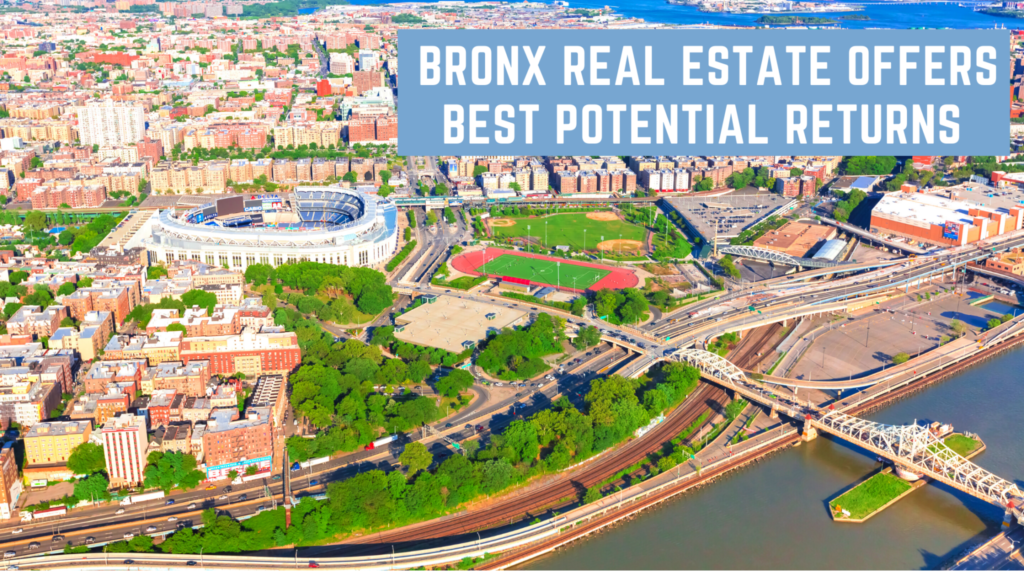
    The Bronx has numerous residential neighborhoods, including single-family homes and multifamily developments. It also has retail, with some big-box stores, several shopping areas, and warehouse space. It’s in the Bronx where you find the Yankee Stadium. Some of the best neighborhoods are Throgs Neck, Riverdale, and Wakefield. If you are looking for a home to buy or rent, you may want to consider one of these neighborhoods.

    It’s worth noting that although in the first half of 2020, the Bronx closed at the lowest median sale price among the four NYC boroughs, it recorded the 2nd-highest price increase. The borough’s 8% year-over-year gain brings the H1’sH1’s median sale price in 2019 H1 from $420,000 to $455,000 in H1 2020.

    The NYC Tax Laws Impact on Property Market

    The federal tax law change eliminates the local and state tax deduction, meaning that many real estate/property owners can’t write off their huge NYC property federal tax bills in their entirety. That move is likely to push many to sell homes since they will no longer afford the associated carrying costs. For those owners with multi-million dollar properties, the newly approved mansion tax gives them a reason to dispose of as soon as possible.

    As listings continue pilling up and the carrying costs rack up, you can expect to see a surge of sellers willing to mark down their NYC properties and sell. In a stronger indication that realtors and homeowners are gaining more confidence in the Bronx’s housing market, Point2 Homes indicates that property asking prices in the Bronx have increased by a massive 54% over the past five years.

    For the past couple of years, analysts and real estate experts have billed the Bronx as “the last frontier” in real estate investment. This is true for developers looking to get a great return for their Dollar. Prices in this borough are hovering much lower than the NYC average, particularly the highs in Manhattan and Brooklyn.

    The Impact of the Covid-19 Pandemic

    From a purely numbers perspective, even before the onset of Covid-19, the multifamily market in New York State was already experiencing a slowdown, largely due to the Housing Act of 2019. Still, the relative market stability in Q1 may not maintain into the Q2, despite the drastic measures taken, such as lowering the Federal Reserve’s interest rates to near zero because of the Covid-19 effect.

    When the first Covid-19 cases were confirmed in early March, NY’s real estate industry took note but largely continued to operate as normal. However, now the outlook has changed significantly. New homes for sale decreased 9%, and pending home sales came down 2.9%. Inventory levels declined by 10.4%. 

    According to one analysis of the Covid-19 impact on the residential market in NYC, property prices remain largely unaffected despite a downward movement in terms of transactional activity. However, the pricing trends remained firmly positive in places like the Bronx while the NYC median sale price remained steady above what was seen over the same period in 2019.

    Some Recent Bronx Deals worth Noting

    Most developers venturing into the Bronx are targeting entry-level buyers, or renters seeking quality apartments in a new and growing neighborhood. Compared to the other NYC boroughs, quality housing in the Bronx remains extremely affordable. Even though the borough is still a long way away from rivaling the other boroughs, specific neighborhoods are beginning to catch up, especially in terms of pricing. In the South Bronx, pockets are quickly becoming popular destinations for new multifamily residents, new bars, restaurants, coffee shops, and trendy nightlife. 

    Although the overall New York City real property market may be experiencing a slowdown, you can still get funding if you have the right deals. This makes it critical to analyze the available buying opportunities on a case-by-case basis as you continue monitoring the market.  For example, despite the Covid-19 impact on the market, April 2020 saw many deals that included a pair of rent-stabilized buildings located in the Bronx. For example, Prana Investments is buying two buildings at 1226 and 1240 Sherman Avenue for $17 million from the Morgan Group. Both the buildings stand six stories tall with 123 units overall.

    Conclusion

    According to housing experts at Realtor, in 2020, the Bronx housing market is a buyer’s market. This means there are generally more active homes available for sale than buyers. As of July, there were 1,957 homes for sale in the borough, of which 123 were new week-old listing. The Bronx has 44 neighborhoods. Morris Park comes in at a median listing price of $799K, which makes it the most expensive neighborhood, while Pelham Parkway is the most affordable with a median listing price of about $250K. 

    There is no secret to why the Bronx holds much potential for investors. The newfound popularity of the borough stems mainly from its proximity to Manhattan combined with several other plusses. These include reduced crime rates, climbing rents, and an influx of capital. These factors all play an important role in a successful investment strategy.

    Interested in investing in Bronx Real Estate? 
    Check out these investment opportunities we’ve identified. 

  • How First Time Home Buyers Can Benefit from Dip in Prices in the Bronx

    If you wish to invest in the New York City property market in 2020 and beyond, you need to identify the best neighborhoods to put your money. Under ordinary circumstances, to successfully pinpoint those prime areas, you would go for the locations where sales have slipped, or new developments are lingering on the property market. However, now the Covid-19 pandemic and new housing rules are completely reshaping the real estate market and not just in NYC but globally. There are now additional considerations that you need to take into account as a buyer looking for investment locations.

    Lenders and developers alike are now more cautious when reviewing projects and holding back a bit on investment amid the market softening being witnessed. The outlook for the sales market in the Bronx is mixed. Real estate experts expect multifamily sales to remain relatively sluggish as the market adjusts to the new reality and learn to cope with challenges presented by the 2019 rent regulations and the COVID-19 environment. Matters become more uncertain in 2020 being an election year.

    Bronx residents can, however, expect to see growth in the years ahead. Consider that over the past five years, in the Bronx, the value of properties has increased by 54%, the highest recorded rate in New York City. These are markets are that can potentially benefit both sellers and buyers. They allow first-time homebuyers to acquire a more affordable property compared to neighborhoods in Brooklyn or Manhattan.

    An Overview of the NYC and Bronx Housing Market

    NYC’s current housing market can be described as cool, although some are calling it a buyer’s market. In 2016 and 2018, things slowed down significantly as international buyers found it harder to acquire properties or showed less inclination to buy. On top of that, was the emerging trend of properties being sold below their asking price, except those located in the cheapest neighborhoods of New York! 

    Since then, sales volume has somewhat increased, and now there is a wider selection than several years ago. Perhaps more importantly, for the first time, home buyer prices are currently tenth to a quarter less than their 2015 highs. This is why now is a good time to acquire NYC real estate as the market will likely continue to warming up as long as the economic stability holds.

    Jessica Swersey of Warburg Realty opines that 2020 can be expected to be similar to 2019 in real estate with perhaps more hesitation to pull the trigger when buying. Oversaturation of unabsorbed inventory coupled with more inventory being released is likely to lead to inventory sitting on the property market. Jessica thinks that things will hold steady, and NYC will remain a buyer’s market.

    The 2020 Election Year Effect

    The uncertainty surrounding 2020 as an election year also throws some spanners into the works. This is likely to cause many homebuyers to hold back further as they wait to see how things will shape up after November 2020. NYC saw a total of 14,216 sales, which was 41% less than seen during the first half of 2019. However, pricing trends remained positive, with the NYC year-to-date median sale price across the boroughs holding at $690,000, a 3% gain over the first half of 2019. 

    Breaking it down to the borough level, the market saw significant disparities over the first half of 2020. Throughout H1 2020, the Bronx investment sales market has seen 84 transactions, consisting of 116 properties worth a total gross of $436 million. This represents 42% and 41% drop in sales transaction and building volume, respectively, a 63% decrease in dollar volume compared to 1H2019. 

    The Covid-19 Impact on Property Prices

    Many New York residents are working from home now—and many may not go back to the office even after the Covid-19 Pandemic subsides. Companies now have a better sense of the health benefits of keeping employees apart and the savings in cost. Apartments with a separate room or nook that offers video conferencing privacy or can be used as a home office are in greater demand. And because sellers recognize that, they are making such properties available. 

    Homebuyers may be more ready to trade off sky-high views for townhouses or lower floors and reduce reliance on apartment elevators. According to Nada Rizk of Brown Harris Stevens, overall, it’s become more desirable to live in less densely populated buildings and neighborhoods such as the Bronx as it limits Covid-19 exposure, at least for the short term. 

    Why the Bronx is growing in Attraction

    As families and individuals are getting priced out of Manhattan, Queens, and Brooklyn, the Bronx is now being seen by many as the go-to place, the last frontier of New York’s “affordable real estates.” The proximity to Manhattan and attractive home prices are seen as the primary drivers of demand for real estate in the Bronx. The proximity of the Bronx to public transportation and major highways, including four new Metro-North stations and the new Soundview Ferry, will make commuting to inner NY easier, spur faster development, and attract new retail outlets. All these are a home owner’s dream.  

    Easy access to public transportation — Metro-North stations, subways, and buses — is one factor that is making the Bronx a worth home investment. If you are looking to purchase a home in the Bronx, consider what real estate experts call a tipping point. The median tipping point nationally is around two years, but in NYC, it’s 5.8 years. 

    In the South Bronx, particularly along the Grand Concourse, it’s not rare to see co-ops selling properties at above-asking prices as bidding wars rise over the spacious units on offer in the area.

    The Bottom-Line

    As many homeowners leave for the suburbs, Bronx offers attractive alternatives and great investment opportunities. Besides having more affordable properties, the borough has seen steady and strong price appreciation recently, giving new homebuyers considerable potential to build equity.

    Despite the recent price appreciation, real estate throughout the Bronx is still offering new homebuyers a significant discount. Besides, with historically low-interest rates and comparatively low land prices, there’s still much-untapped value throughout the borough for new buyers. 

  • Bronx Real Estate Offers Best Return Potential

    Bronx Real Estate Offers Best Return Potential

    Bronx Real Estate Offers Best Potential Returns

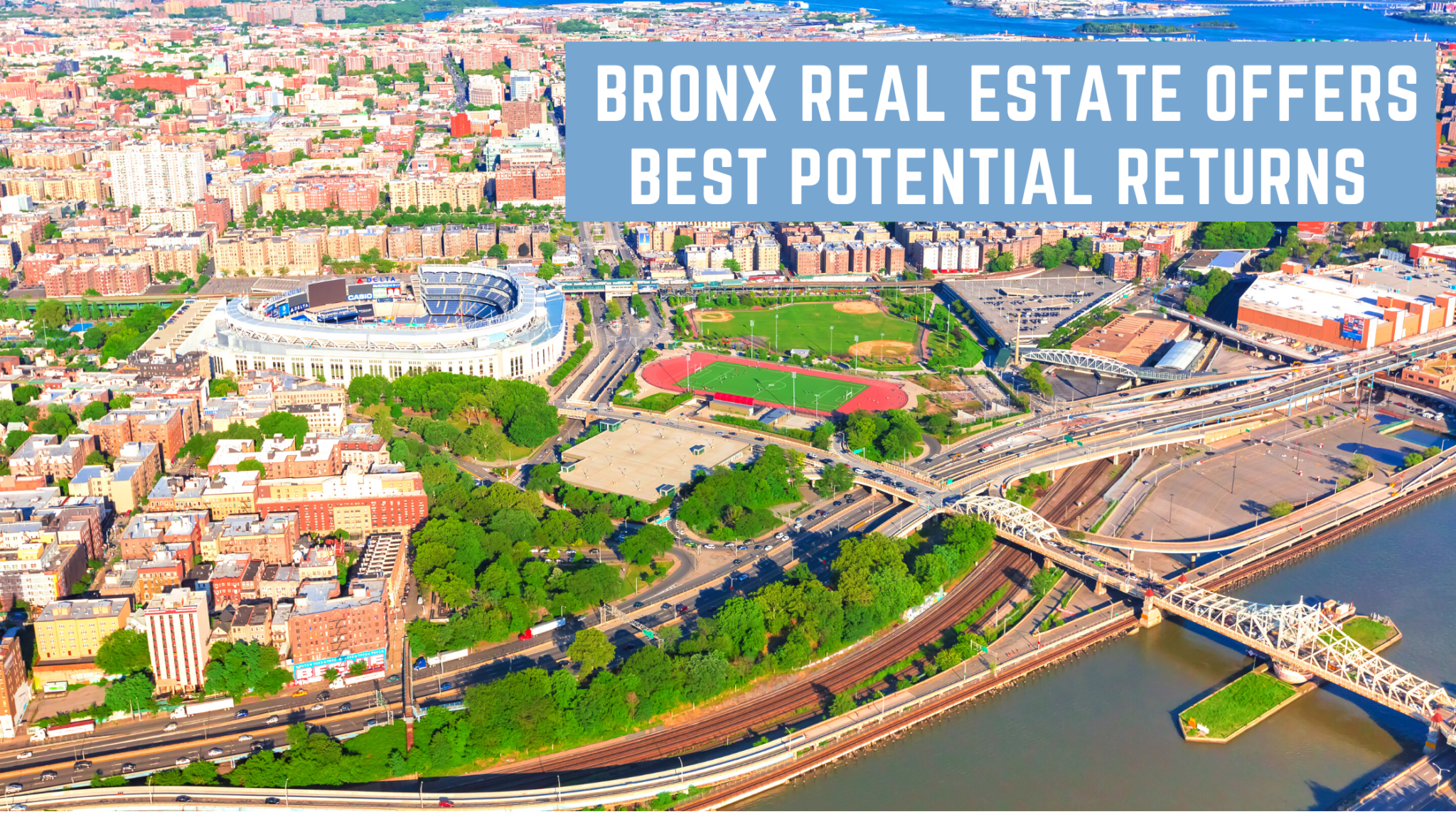
    Looking for the best real estate return potential in New York real estate? As individuals and families have been priced out of Manhattan, Brooklyn, and Queens, the Bronx is seen by many as the last frontier of “affordable real estate” in New York City. Attractive pricing and proximity to Manhattan are the primary drivers of demand for Bronx real estate. The borough’s proximity to major highways and public transportation, including the new Soundview Ferry, and four new Metro North stations, will make commuting easier, spur development, and attract new retail throughout the borough.

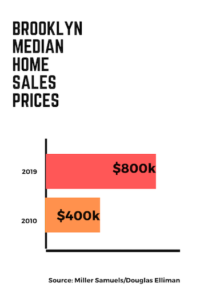
    Bronx real estate may offer some of the best value in the city but the future growth reflects opportunities last seen in Brooklyn beginning after the 2012 election. From 2012 – 2019 median home prices have risen from $400k to $800k in Brooklyn according to Curbed Data provided by Miller Samuelson and Douglas Elliman.
    Brooklyn Median Home Sales Prices

    Brownstone NYC (BNYC) has invested in Brooklyn, Queens, and the Bronx for over 10 years allowing them to identify and help our clients participate in real estate trends. Managing Director, Schelton Assoumou, believes that the Bronx real estate market today is similar to Brooklyn’s in 2011. He believes that the Bronx and Mt. Vernon neighborhoods offer investors the greatest opportunities for potential upside, saying

    “Multi-family homes in the South Bronx are currently asking 25% more than when we flipped them just 4 years ago in areas no one wanted to risk capital and off everyone’s radar.”

    Other industry professionals share the confidence in the long-term growth trend happening throughout the borough. Agents at New York City based boutique brokerage, Amian Realty, agree with the bullish assessment. Having represented BNYC in many investment sales throughout the Bronx, Peter Drinkwater, lead salesman at Amian Realty, adds “New market rate and affordable housing developments have successfully been leased up and or sold in Mott Haven and Grand Concourse with more residential and retail planned. Furthermore, with comparatively low land prices and historically low interest rates there’s still tremendous untapped value in affordable and market rate development throughout the borough.”

    For instance,

    Three Family in East Tremont asking $999,000

    https://www.zillow.com/homedetails/1933-Vyse-Ave-Bronx-NY-10460/83178654_zpid/

    Three Family in East Tremont asking $999,000

    https://www.zillow.com/homedetails/2355-Washington-Ave-Bronx-NY-10458/83178529_zpid/

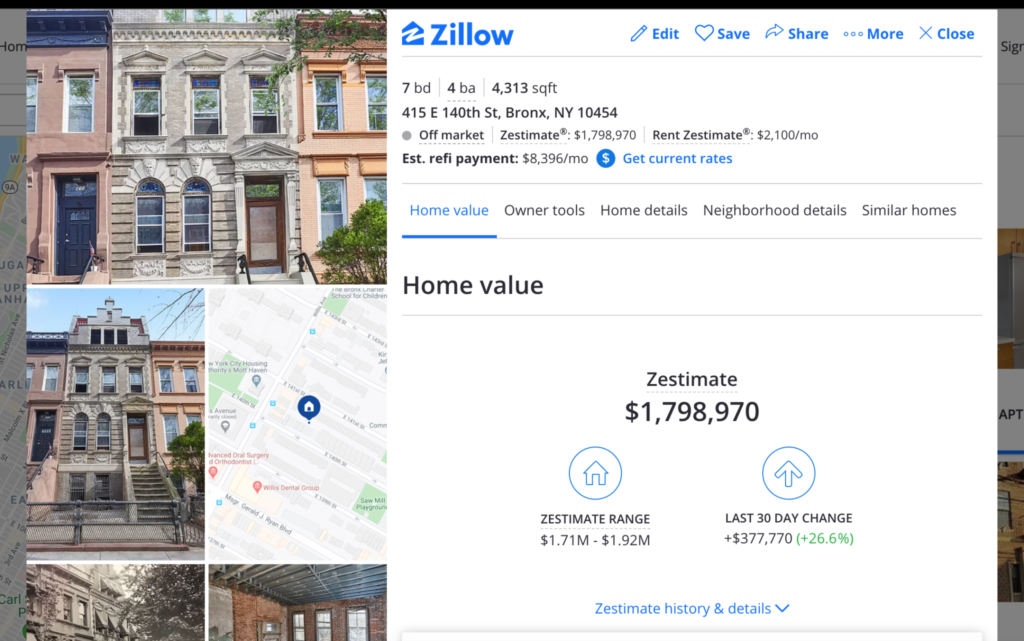
    These asking prices offer appreciation potential like that which can be seen on properties like 637 E 233rd St Bronx, NY. Consider that Zillow expects the price range has been about $140,000 in the past 30 days alone! If you put bought the property with 20% of the asking price, the equity appreciation could be equal to your down payment. However, that’s just the beginning. Other properties have seen better 30 day ranges, as seen at 414 E 140th St Bronx, NY 10454.

    415 E 140th St Bronx NY 10454

    As the number of consumers from Brooklyn seeking larger properties accelerates, existing single family homes stand to benefit if priced correctly. With many companies delaying when they’ll be returning to the office, or adjusting to a not requiring employees to being the office at all, these property trends could be sign of a longer term change. One leading company has been Nationwide Insurance, a Fortune 100 company, who has moved 98% of it’s workforce to remote, permanently.

    For many professionals this change comes as no surprise. Transitioning to working remote is easier than ever thanks to technology, but the trend began many years ago. Today’s digital business solutions are allowing people to remain highly productive with continuing their work cycles. Digital business tools like Calendly, Docusign and Zoom have seen mass adoption giving consumers a quality experience at affordable rates.

    As the work from home movement accelerates there has been high growth in many Bronx submarkets, particularly in the South Bronx such as, Mott Haven, Port Morris, and Grand Concourse.

    These neighborhoods offer upside potential as they continue year over year growth. Mott Haven’s proximity to Manhattan $700,000 properties could easily see price points of $1,000,000 thanks to it only being two stops away on the train.

    Here are a few listings that support our view:

    It’s with this backdrop for demand that Bronx residents should expect growth moving forward. Consider that over the past 5 years, the value of properties in the Bronx has increased by 54%, the highest rate in NYC. These market changes can benefit both buyers and sellers. It allows first time homebuyers to buy a property that’s more affordable than comparable neighborhoods in Manhattan or Brooklyn. Multi-Family properties in the South Bronx have appreciated in value an average of nearly 8% year over year the past 4 years. (1299 Clay sold for $525k in Jan 2016, just listed on the market for $699k in July 2020).

    Despite the recent price appreciation, properties throughout the Bronx still offer homebuyers a significant discount to market. Comparable properties in the Bronx can be acquired for half to a third of comparable properties in Brooklyn.

    For example,167 Hopkins St, Brooklyn, NY 11206 an occupied Two-Family in need of updates with 2 parking spaces sold for $1,300,000 in April 2020. A similar property at 1210 Vsye Ave, Bronx, NY 10459 a recently updated Two-Family with 2 parking spaces sold for $735,000 in March 2020.

    Below is a snapshot of transactions Brownstone NYC and Amian Realty have partnered with to renovate and resell.

    • 1299 Clay Ave – Two Family acquired distressed property requiring complete interior & exterior façade gut renovation sold for $525,000 in January 2016, just listed on the market for $699,000 in July 2020
    • 1275 Teller Ave – Two Family sold for $562,500 in September 2016, estimated value July 2020 is close to $700,000
    • 1353 Clay Ave – Two Family sold for $570,000 in February 2017, estimated value July 2020 is close to $700,000

    In addition to more affordable properties, the Bronx has seen strong and steady price appreciation giving new homebuyers significant potential to build equity. The following listings illustrate the home appreciation and higher values in neighborhoods that would have been unheard just 5 years ago. In the Bronx, as you can see, the best is truly yet to come.

    Two Family in Kingsbridge asking $1,100,000

    https://www.zillow.com/homedetails/7-Armand-Pl-Bronx-NY-10463/2078949227_zpid/

    Two Family in Parkchester asking $1,025,000

    https://www.zillow.com/homedetails/1566-White-Plains-Rd-Bronx-NY-10462/29799226_zpid/

    1 – Source Ariel Property Advisors 2019 Year End Report

    2 – Source Ariel Property Advisors 2019 Year End Report

    While many homeowners inside Manhattan and other urban cities are leaving for the suburbs, Bronx real estate offers attractive investment opportunities over the coming years. Investors and home owners can contact Schelton with questions about selling their property or opportunities.

  • How Landlords Can Help Tenants during Covid-19

    Are you wondering how Landlords Can Help Tenants during Covid-19? Coronavirus has badly hit a city where already housing was at a stress point.  Politicians in the City, including Bill de Blasio, the Mayor were just beginning to consider introducing some type of universal rent control in New York when the pandemic hit. 

    The City of New York, perhaps more than any other American metropolitan area, is a city of renters. About 5.4 million people or two-thirds of the City’s households live in rental units. The loss of jobs and declines in incomes associated with Covid-19 is hitting New Yorkers hard. Many are facing challenges in paying house rent.

    It’s important, however, to note that it’s not only renters who are facing challenges. Some landlords are also bearing the brunt of the Pandemic. The majority of small landlords lack access to good credit that can help them cover costs associated with lost or late rents.

    Some are calling for federal and state relief on housing rates as well as other costs typically associated with their rental properties. This would provide them with choices in terms of supporting their tenants. Some are even having to pay higher fees for trash services due to increased trash volumes and even trash violations. This is simply because more people are now working from home.How Landlords Can Help Tenants during Covid-19

    How Can Landlords Help?

    As renters continue losing jobs due to the Covid-19 Pandemic, landlords are faced with tough choices. In April, for example, in New York, as many as 40% of renters were unable to meet their rent obligations. Landlords with tenants in Broadway or the service industry may not be collecting rents even though some of these people are possibly collecting unemployment benefits.

    Under such circumstances, although they are rightly concerned about protecting their investment and keeping up with their mortgage payments, landlords also have a competing concern towards helping out their struggling tenants.

    Some of the ways through which they can help include:

    Keep Building and Facilities Safe

    Landlords have a social and moral responsibility to ensure their tenants are living in healthy and safe environments. This is particularly more pertinent during the Covid19 Pandemic. Provision of services within buildings should take into account health requirements such as social distancing especially for shared services such as Laundromats, gyms, lifts, etc.

    Landlords must do everything reasonably practicable towards ensuring people living or visiting the building are not unnecessarily exposed to the risk of contracting Covid19. They can keep tenants constantly informed of the latest government or local health initiatives, requirements, or guidelines.

    Communicate with Tenants and Share Possible Solutions

    As more businesses continue shutting down due to Covid-19, millions of Americans will need help if they are to survive. Even those New Yorkers who qualify for Federal and State benefits are encountering challenges in the system that hinder access to assistance.

    Although landlords are facing challenges of their own, they are still in positions of easing the woes of their tenants. For example, if you can, talk directly with your tenants or at least request that you be included in the ongoing conversation.

    The Pandemic is giving everyone different pressures and options on how to cope. Find out what kind of concessions your financier or bank might be offering, the landlord insurance options available for you, the kind of inflexible costs that you face such as council rates, and how much of the associated pain you are ready to share – and, perhaps more importantly, for how long.

    Request your tenants to possibly do the same analysis. This is likely to will form a fair basis on which to make compromises.

    Reach out to Your Tenants on a Personal Level

    If as a landlord you have not already done so, reach out to your tenants and see how their businesses and families are being impacted by the Pandemic. Many retail tenants are deemed to be essential but the truth is that they can only operate in a severely constrained manner while others have been declared non-essential. These are the tenants who are likely to experience cash flow issues with rent becoming harder to pay.

    You may need to come up with strategies on how to help them. If you can afford a partial or total rent deferral, you may want to consider offering your tenants such a deferral by modifying the existing lease.

    Signing Rent-Deferral Agreements

    In March, the US Congress passed the Coronavirus Aid, Relief, and Economic Security (CARES) Act. Part of the CARES package is a 60-day moratorium on foreclosures for those homes with mortgage loans that are federally backed. Mortgage forbearance moratorium is a delay of payments without any accrual of fees or interest.

    Landlords receiving forbearance are barred from serving their tenants with eviction notices during the forbearance period. The law also bars landlords with all types of federally backed mortgages from enforcing tenant evictions until at least July 25.

    Landlords are being encouraged to sign rent-deferral agreements with their tenants, in which the signing tenant agrees to add to future payments the unpaid rent.

    Understanding Tenant Eviction Laws

    It is estimated that about 28% of the 43.8 million rental units in the US are covered by the eviction protections offered by the CARES Act. Also covered are other properties in the country subsidized with Low Income Housing Tax Credits as well as other federal backing.

    Whether landlords are necessarily following these new rules is another debate altogether. Although a Bill to forgive all mortgage payments and rent for the period of the Covid-19 crisis was introduced in April by Ilhan Omar, the Minnesota Representative, for now, renters no matter where they live still owe the rent.

    As a landlord, you could opt to reduce, defer, or entirely suspend rent for your tenants for a period in order to avoid tenant insolvency. However, ensure any such decision is documented very carefully.

    Conclusion

    The Covid-19 Pandemic has upended the “status quo” globally and real estate in New York is no exception. Some landlords may never fully recoup the lost payments due to Covid-19 shutdown especially if they previously had gone to court to seek help with collecting rent from a tenant. 

    It’s important, however, to appreciate that the interests of the tenants and the landlords are really complementary. If they act proactively, landlords have an opportunity to turn the current Covid-19 crisis into a window of opportunity mutually beneficial to themselves, the tenants, investors, and the community. 


    If you need help with your property contact Schelton here. 

  • Should I Sell My House During Quarantine?

    Is Now a Good Time to Sell My Home?

    **Update as of July 21, 2020**
    New York has just entered Phase 4 re-opening post the Corona Virus pandemic. While many people will have the option of returning to work, several businesses have reduced or completely eliminated the need to be in the office. This has spurred strong demand for residential properties outside of Manhattan, as predicted in the article below.  

    Many homeowners are facing uncertainty and confusion about selling their home during the Covid pandemic and ensuing riots. Our new reality requires homeowners to consider new tactics to sell their homes quickly.

    Several people believe that the economic uncertainty makes now a bad time to sell. But it’s quite the opposite in many suburban areas due to the demand from urban buyers looking for more space. In this article you’ll learn the insights many real estate investors are currently using and how you can apply them to help sell your home.

    From job losses to businesses facing the prospect of financial ruin, the global Coronavirus Pandemic is causing turmoil. One sector, though, that shows some questionable trends during such uncertain times, is the housing market. The questions on the minds of many sellers is, can I find a home buyer during this time of uncertainty? Is now the right time to sell my home?

    Chris Cawley, a licensed real estate broker in Tarrytown NY reports: “Short term, prices are holding steady and, in many cases, we are being them go up due to multiple offers because the demand is outpacing the supply. It seems that many people who were considering moving out of the city in a couple of years, moved up their timeline and decided they should do it sooner. Others decided that the idea of living in close proximity to their neighbors was too risky. In addition, with many companies leaning towards having their employees work more remotely, there is no longer a need to consider commute time….and if living outside the city is cheaper, why not?”
    Therefore, with home buyers already facing limited choices in New York, if you’ve been considering selling your house, this may be a great time to do it.

    Staying on the housing market, or jumping into it now, could, in fact, work to your best advantage.

    The Current Situation in New York

    Those who can afford it are moving from New York City into surrounding suburbs such as Connecticut and Westchester as they seek to escape the crowded lifestyle as well as the US coronavirus hotspot. Real estate brokers are reporting a rush of buyers from the city seeking more distance from neighbors and the NY crowds.

    Right now, New York brokerage firms see an opportunity as home prices in leafy NY suburban communities are looking increasingly attractive to buyers who want to migrate from the overcrowded city hub. As a home seller, you should too!

    Having noted that, what issues do you need to consider if you are thinking of selling a house in New York during quarantine?

    The New Selling Environment

    It’s stressful enough to sell a home in New York but when selling in the Covid-19 age of social distancing and quarantine, the task is harder. It, however, doesn’t have to be that way. Several simple strategies might help your efforts.

    Even if you are not going to let in potential buyers physically, staging the home has never been more critical. Do it right!

    Amidst the quarantine nightmare, virtual technology has become a must for any listing. Some real estate agents are now employing the latest in 3-D touring, allowing potential buyers to move through your home on their own by using software such as CloudPano and Matterport.

    Finally, be very careful about pricing. There may not be much to choose from right now on the market for buyers, but with the global economy still adapting to changes, you must avoid overpricing your home.

    Record Prices for Suburban Homes

    Although the Covid-19 Pandemic has brought many industries to a halt, Americans are still buying homes, and demand is high while supply is witnessing record lows. According to one poll of real estate agents spread across the country, 75% reported that property prices are actually picking up steam or holding steady.

    One factor that could be contributing to that demand is the fact that many people want to buy homes for working at home or as they make other life changes such as moving away from the Covid-19 hotspot of NYC, with companies like Twitter telling employees they have the option to work from home permanently. Considering the unique Covid-19 circumstances we are currently in, that’s something definitely worth noting as it’s a window of opportunity for home sellers worth exploring.

    However, the US economic future is looking . The longer you wait to list your home, the higher the risk of the value declining as the property market buckles under pressure from severe job losses and a recession.

    Covid-19 Health Safety Issues

    Although this is a scary time for you to be out checking out or selling properties in New York, that is still possible to do and stay relatively safe even in this Covid-19 hotspot. The housing industry is adapting rapidly, introducing new approaches designed to minimize exposure to the Coronavirus.

    It’s safe, however, to say the days of elaborate home showings are gone where prospective buyers would meet by a smiling real estate agent or homeowner with a glass of wine and cheese, at least for some time.

    For many real estate agents, for instance, most of their activities are being done virtually. Because home showings or open houses are not easy to arrange due to quarantine or healthy safety issues, New York City real estate listings agents are now offering virtual tours.

    Digital closings, or “eClosings,” are according to sellers and buyers the ability to electronically sign settlement documents without having to meet in order to close the sale deal. Purchase agreements can now be drafted to include covid-19-based protections for both the seller and buyer.

    Financial Considerations

    It’s important to note that while current property market conditions are offering an incredible opportunity for buyers to leverage the historically low mortgage interest rates, these are actually shooting up rather fast. This is because so many individuals are refinancing.

    Financing is likely to be stricter in the days ahead. For example, if you are applying for a new mortgage from JPMorgan Chase, you will need it becomes mandatory to make a down payment that’s equal to 20% of the value of the home as well a higher credit score.

    This trend highlights how quickly banks are shifting gears in response to the darkening economic outlook in the US after government measures to contain Covid-19 put millions of Americans out of work plunging the economy into recession.

    Therefore, if you wait too long to list your home, you could end up missing this money-saving boat being offered to potential buyers.

    Residential Real Estate is Government Supported

    In March, the Department of Homeland Security gave the property industry a big boost when residential real estate got classified as an “essential business”. This was after several states, such as Washington and California lifted their stay-in-place orders for real estate appraisers, agents, and title agents.

    Banks are also offering a range of programs geared towards helping businesses and individual customers affected by the Covid-19 pandemic. These include deferred payments, fee waivers, and other customer customized accommodations. Fannie Mae & Freddie Mac, two government backed entities, issue over 75% of the mortgages in the US and continue to do so to help buyers take advantage of record low mortgage rates.  These tailwinds favor home buyers’ ability to buy and potentially even afford a larger purchase.

    Conclusion

    The home sales outlook in New York is uncertain and will be very reliant on how the post-Corona recovery takes shape. Ultimately, the economic impact of Covid-19 and its implications on housing activity is going to be a function of the direct actions taken by stakeholders to combat its spread and the economic stimulus packages by the government.

    The world is in the midst of a crisis and nearly everything is different now. True, we may never go back to the old normal but even this global pandemic will end. Your home will ultimately sell and the time to get it ready is now.

    Schelton Assoumou is a New York based real estate investor specializing in the affordable housing markets with emphasis on the New York City, Westchester and Long Island markets. His practice has placed hundreds of tenants and invested millions for multiple institutional and individual investors in this sector.

  • Modular Home NYC

    Modular Home NYC

    Schelton Assoumou and Brownstone NYC continue building modular homes in New York City and New York State. The company recently announced multiple projects which will create over 40 homes using Modular Technology in 2023 and beyond.

    Schelton Assoumou, the managing director of Brownstone NYC (“Brownstone”) is working on several Modular Projects in the Greater New York City Area (Brooklyn, Queens, Bronx, Westchester, etc.)

    Brownstone is in the process of selecting one partner who specializes in building Modular Homes. Schelton and his team visited several modular home factories in Pennsylvania in December 2019. They were strengthened in the idea that modular homes construction are the wave of the future of the new construction industry in New York City; especially since the major historical barriers to entry in this valuable market are being resolved.  Therefore, the cost savings of this prevalent building technology most United States markets will now be a viable option for construction in New York City.

    In addition to specific New York City building codes constraints now being lifted, another issue to modular homes in New York City is the logistical challenge. Indeed, the homes are currently built in out of state factories and must to be transported to the site and installed with the crane, roads and overpasses make this little more difficult for New York city. In spite of all these challenges, Brownstone has concluded that Modular Home is a viable alternative to traditional Frame and Brick Houses. Brownstone projects up to five pilot projects completed before the end of 2020.

    Modular Homes

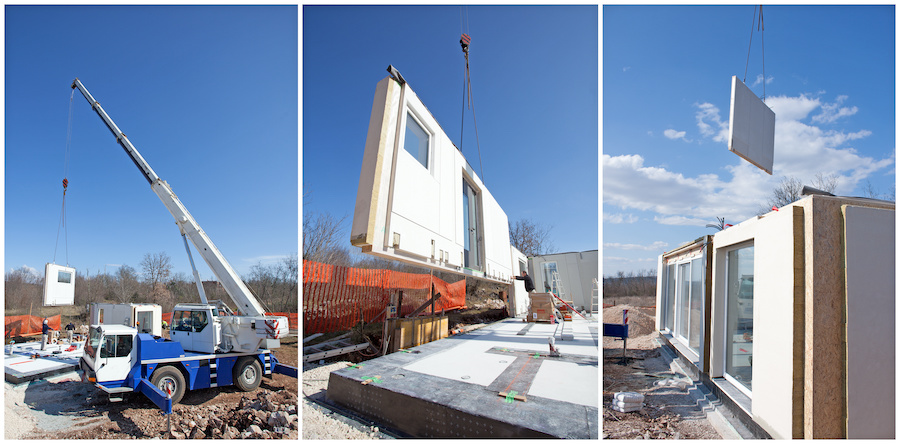
    Modular buildings and modular homes are prefabricated buildings or houses that consist of repeated sections called modules. “Modular” is a construction method that involves constructing sections away from the building site, then delivering them to the intended site. Installation of the prefabricated sections is completed on site and it takes 3 to 4 days to assemble it on the site. Prefabricated sections are sometimes placed using a crane. The modules can be placed side-by-side, end-to-end, or stacked, allowing a variety of configurations and styles. After placement the modules are joined together using inter-module connections, also known as inter-connections. The inter-connections tie the individual modules together to form the overall building structure.

    There are three main benefits to going modular over traditional in real estate.

    • Speed: The building process for the main shell module can be completed in a factory in just five to eight days, with the builder assembling and doing finishing work at the building site.
    • Cost: Modular home construction may cost less than a traditional home, because the new homes can be manufactured faster and requires less man-power.
    • Quality: A manufactured home may actually be of superior quality to a site-built home, primarily because the materials are built in a climate-controlled environment, not exposed to the elements, from cold to precipitation to humidity.

    Looking for great investment opportunities? Check out these Bronx Real Estate investment opportunities.  

  • Schelton Assoumou invited to the 400 Foundation

    Schelton Assoumou invited to the 400 Foundation

    Schelton Assoumou invited to the 400 Foundation “Moving the Dream Forward Luncheon”

    Watch the video on Facebook

    Schelton Assoumou invited to the 400 Foundation “Moving the Dream Forward Luncheon”

    400 Foundation is a Not for profit, faith based foundation working to advance economic equality in New York City’s development and construction Industry. Faith Leaders are stepping up to address 400 years of economic injustice by promoting Jobs and opportunities for men and women of color in New York City development and construction industry.

    400 Foundation has initiated a dialogue with city, state elected officials to remove burdensome, prohibitive regulations and provide technical assistance that would give entrepreneurs a path to success and give minority owned development and construction firms in New York City, greater access to capital.

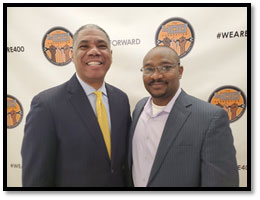
    Schelton Assoumou, the Managing Director of Brownstone NYC fully supports all activities initiated or sponsored by 400 Foundation. He was one of the invitees at the Nov.15,2019 “Moving the Dream Forward” Luncheon that was sponsored by Citigroup and held at Citi Group’s Global Headquarter in New York City.

    This Luncheon was seeking to raise $3 Million for several foundation Programs such as:

    • A 400 Foundation Think Tank/Task Force
    • The 400 Skills Pipeline
    • The 400 Business Accelerator
    • The Faith based Development REIT (Real Estate Investment Trust)
    • Supporting the 400 Forward Legislative Push

    The event was supported by Citigroup’s Crystal Mc Gary and Raymond J. McGuire and Real Estate Board of New York Jacqui Williams In 2020.

    Based on his personal story, Schelton intends to launch “ASK Second Chance Foundation”(“ASK”) in 2020.

    ASK will be a platform to execute recent criminal justice reform initiatives and create an execution vehicle to outreach programs such as the 400 Foundation, Marshall Project, STRIVE, etc. For example, ASK will provide job training, professional certificates and licenses for a new career, financial literacy, affordable housing for individuals dealing with the criminal justice.

    Learn about a real community investment model here. 

  • Assoumou Released From Federal Supervision

    SCHELTON ASSOUMOU RELEASED FROM FEDERAL SUPERVISION

    Brooklyn, NY, August 22, 2019 – The United States District Court, through the order of Judge Brian Corcoran, has ordered early termination of supervision of Schelton Assoumou in case number 1:13-cr-00491-BMC, United States of America v. Schelton Assoumou.

    Assoumou was indicted On Tuesday January 15th, 2013 with bank and wire fraud by the United States Eastern District of New York. In order to resolve the criminal charges against him Mr. Assoumou pled guilty to one (1) count of wire fraud in connection with the making of the false statements regarding owner-occupiers versus investors.

    On May 16, 2018 the Court sentenced Assoumou to time served and two (2) years of supervised release. No restitution was imposed as part of his sentence nor was he barred from the real estate industry.

    Assoumou, who was released for exemplary behavior, is now free to enter into agreement without court supervision or sanctions.

    Mr. Assoumou will further his work in his community and to serve as Executive Director of Brownstone NYC.

    For interview inquiries or to reach Schelton please visit https://scheltonassoumou.com/contact-schelton